Swimming with dolphins is one of the most requested and best-selling excursions on the Riviera Maya. Many holidaymakers coming to Playa del Carmen ask us whether we organise the “dolphin swim”, which parks we recommend, to please the children, for newlyweds on their honeymoon, or simply to make a dream come true.
So the answer is no: as an ecotourism agency, we do not sell tickets for this attraction, which is found in a dozen places all along the Riviera.
Some resorts even have their own park, and this is obviously a huge business that we have deliberately chosen not to take part in. Here are a few explanations which, we hope, will help you make a better choice.
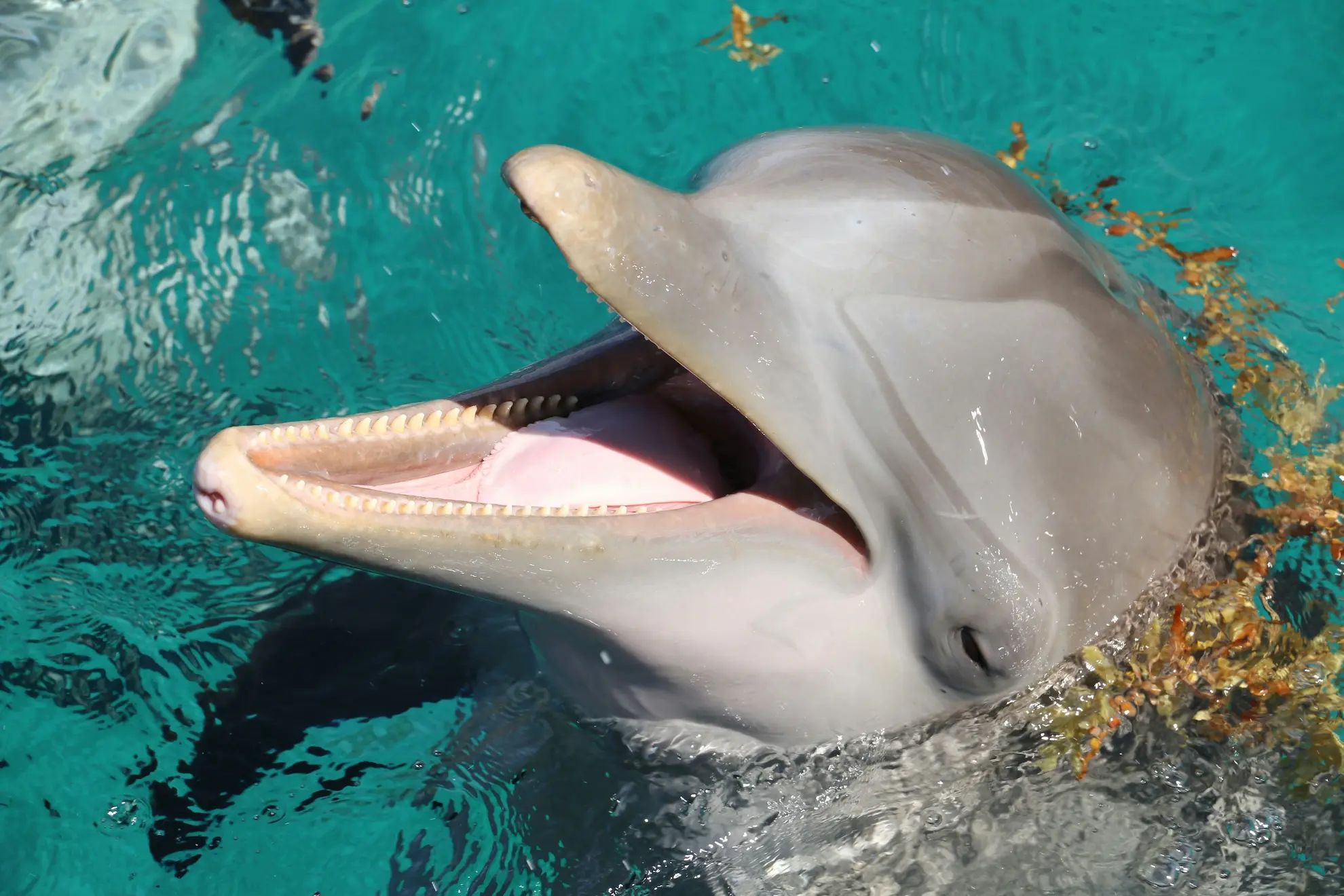
These animals have one feature that works against them: they look happy because they wear a permanent smile, which makes some people think they enjoy performing their “tricks”. The reality is very different.
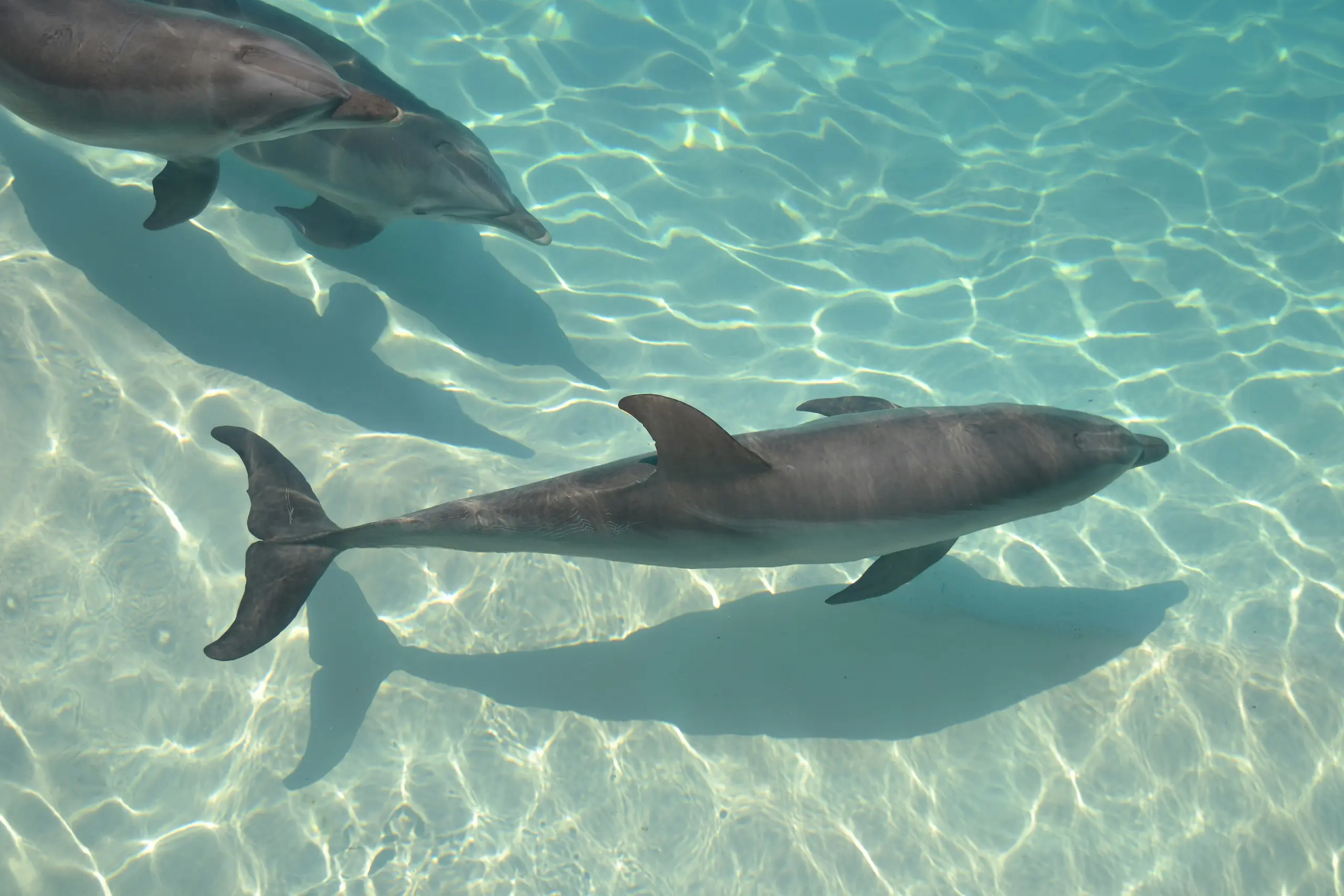
- Dolphins have been perfectly evolved for thousands of years to live in the wild in the deep oceans, and not in concrete pools a few metres deep.
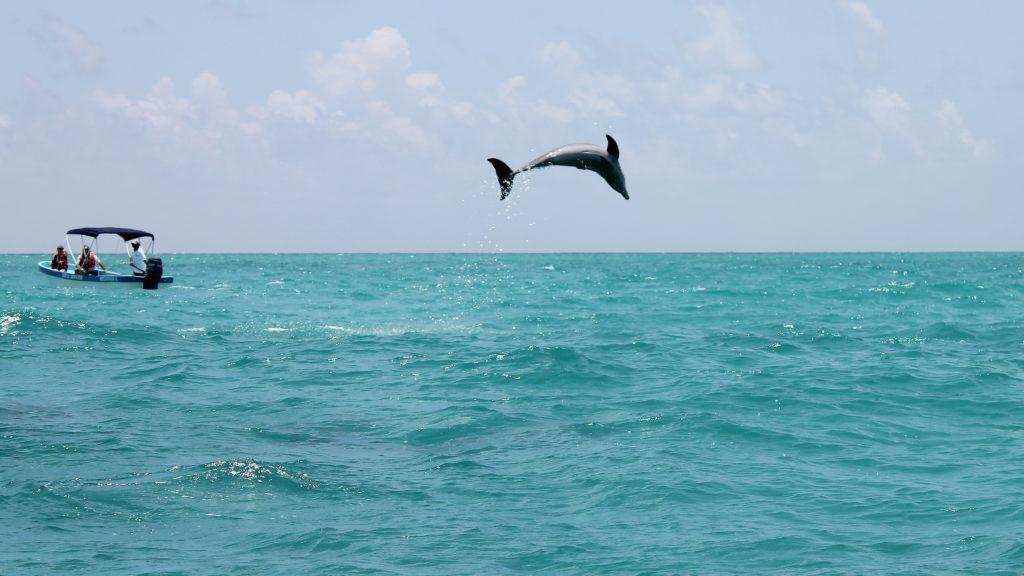
- In their natural environment, they travel up to a hundred kilometres a day, use their sonar, look for their food and live alongside different species. In a park, they swim in circles, eat nothing but dead frozen fish and become depressed.
- The great particularity of the dolphin is that it emits ultrasound. It is a kind of sonar that allows it to find its bearings in its environment, to communicate and even to hunt. In a concrete pool, the animals can no longer communicate properly.
- Thanks to this sonar, the dolphin is never blind, not even at night: it can detect a small fish swimming hundreds of metres away, and even under the sand.
- Now imagine that same sonar bouncing off the walls of a pool all day long. Imagine a bowl with a fish inside it, and someone spending the whole day tapping on the glass.
- Dolphins eat an average of 25 kilos of food a day. In the parks, they are fed one sardine at a time, only when they perform a trick. Specialists explain that they stop obeying once they are full: they are therefore “trained” through food deprivation.
- Life expectancy in captivity is halved. A free dolphin will live around 40 to 50 years, compared with about twenty years for a captive dolphin.
Most of the time they are captured in an appalling way, as the documentary “The Cove” in Japan shows. They are taken away from their families forever, which is very hard for animals that live in a community and for which social bonds are essential.
Dolphin parks are not animal protection organisations: they were created to generate profit, with some parks earning up to a million dollars per dolphin.
Dolphinariums are bad for dolphins
If you or your children love dolphins, bear in mind that dolphinariums do these animals far more harm than good.
You may be thinking that everyone goes, and that one visitor more or less will not change anything. Think again: the parks would not open if demand were not so strong. Not buying a ticket means taking responsibility.
If your dream is to see dolphins, choose instead the Sian Ka’an reserve, where they are completely free. Swimming with them is impossible: approaching them remains strictly regulated inside the reserve.
You should also know that every child we have explained this to has understood the message perfectly. They were not shocked, quite the opposite: they wanted to know more.
Today we are talking about dolphins, but animal trafficking does not concern them alone. When you arrive in Playa del Carmen, you will see various animals on the famous Fifth Avenue: iguanas, snakes, and even baby tigers or lion cubs, which are obviously not animals from Mexico. You will be asked for a small sum for a photo or to stroke them, and this has nothing to do with protecting these species.
This is in no way a moralising message, but a reality of the Riviera Maya and the Caribbean. You now know why we do not sell this outing and why we never will.
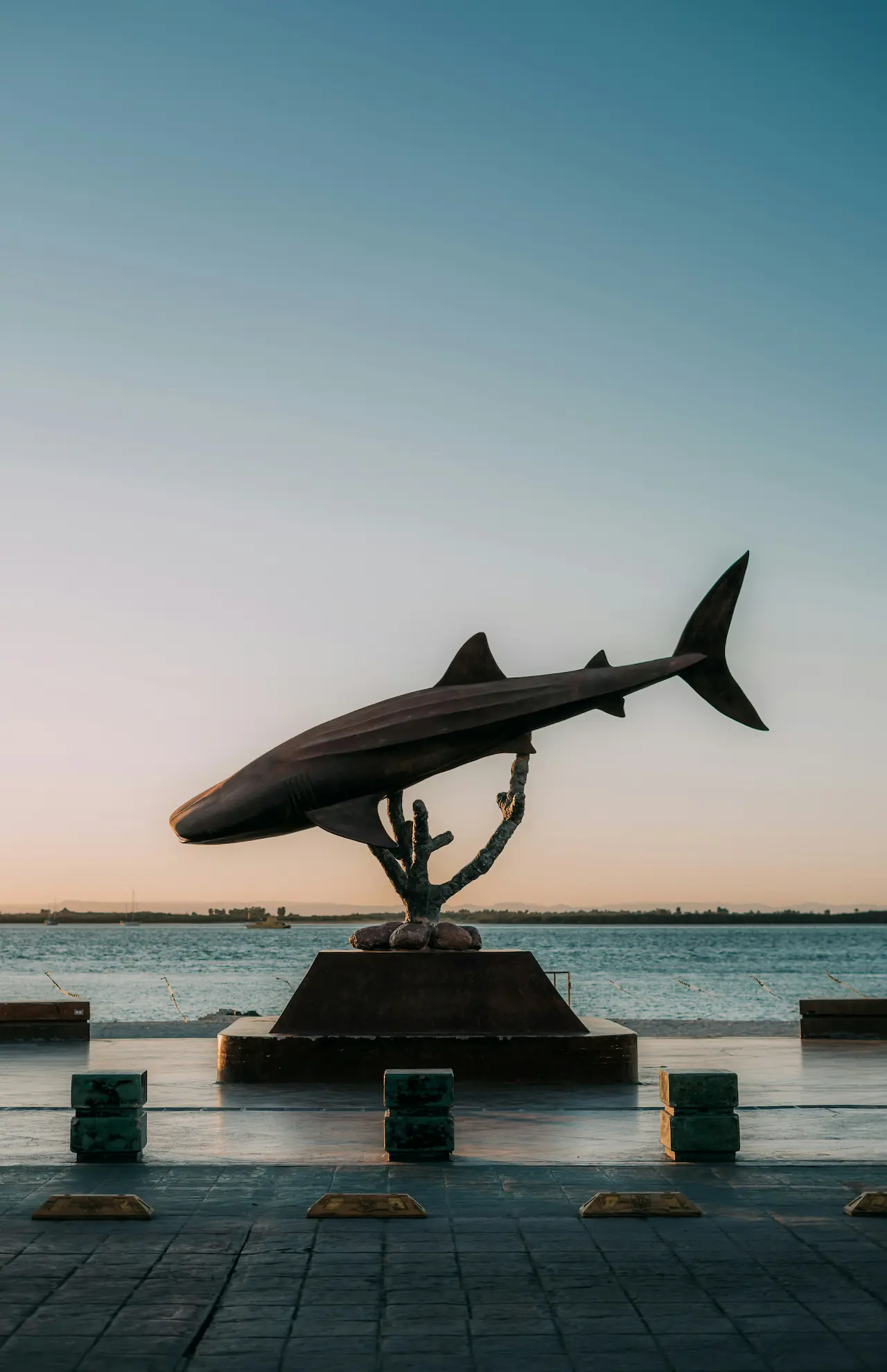
If you love animals, you can meet them in their natural environment: that is the whole point of our whale shark outing, supervised and strictly regulated.
To go further: the documentary “The Cove”, made with the former trainer of Flipper.